
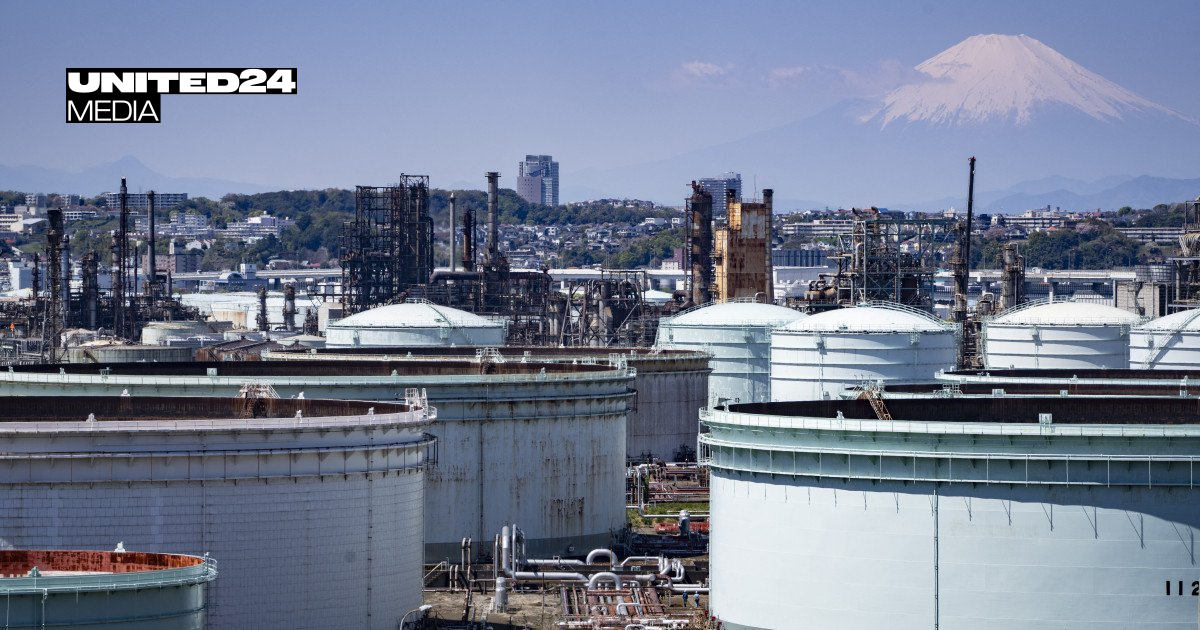
This news is an insult for anyone in EU paying gas bills. This shipment works directly against the strategic goals of Ukraine and the regulatory framework of the EU. It essentially provides a “relief valve” for the damage caused by Ukrainian strikes on Russian energy infrastructure.
Every barrel of fuel that reaches Russia is a shell or a drone fired at Ukraine.
Japan and South Korea must decide if these short-term profits are worth the long-term cost of alienating NATO allies. Personally, this makes me rethink my support for Japanese brands and services.
I was due to travel to Japan next year flr a holiday. Europe together strong. Im not reactionary but I will float the idea of a different trip to my partner and if theh are happy we will move plans.
ship to ship at sea transferrers are a tricky thing… would be a shame if something were to … interupt such a transfer
Inherent Vice
The headline should probably highlight that it appears to be Korea selling the fuel they purchased from Japan.
Needs more sanctions.
Doesn’t sound like Japan itself has been super-flush with jet fuel, at least as of this article from 2024:
11 Jul 2024 | 10:21 UTC
Japan’s Narita Airport set for first direct jet fuel imports amid domestic shortages
Japan’s Narita International Airport is set for what will be the first ever direct import of jet fuel from abroad via trading houses as part of its efforts to alleviate ongoing aviation fuel shortages, a company spokesperson told S&P Global Commodity Insights July 11.
“To increase our supplier options, we are requesting trading houses in addition to refiners to import jet fuel directly from overseas,” the spokesperson said.
Policy steps
The news of direct jet fuel imports by Narita Airport emerged as the Japanese government is considering compiling a policy response to address aviation fuel shortages in the country at a task force meeting July 16.
South Korean refiners have said that they are more than willing to increase jet fuel exports to Japan, taking advantage of pent-up demand in the neighboring country as well as an improving Asian crack spread.
However, it has been difficult to provide and guarantee extra monthly spot jet fuel cargoes due to term supply contract and other large volume sales commitments with major buyers in the US and Australia, middle distillate marketers at two South Korean refiners told Commodity Insights.
“A lot of efforts are currently put in place to provide extra jet fuel cargoes for our Japanese trading partners … any surplus barrels after meeting all the monthly supply deals to US buyers would be set aside for incremental shipments to Japan,” a middle distillate sales trader at a South Korean refiner said.
From April of this year:
https://www.upi.com/Voices/2026/04/24/perspectives-global-jet-fuel-crisis/9591777035708/
A global jet fuel crisis is closer than the world knows
On April 16, Fatih Birol, Executive Director of the International Energy Agency, reported that European jet fuel reserves had fallen to roughly six weeks of supply – a warning that, one week on, means approximately five weeks remain. With the Strait of Hormuz still closed, Europe’s aviation sector is in a genuinely precarious position.
The same day Birol spoke, Britain’s Daily Telegraph reported that Lufthansa and KLM had announced service reductions. Lufthansa plans to ground all 27 aircraft operated by its regional subsidiary CityLine, which has provided intra-European business routes, and will remove six additional long-haul aircraft from its schedule after the summer travel season. A senior Lufthansa official cited geopolitical instability and surging jet fuel costs as the reasons.
The European Union, which sources roughly 75% of its jet fuel from the Middle East, is now scrambling to respond. Options under discussion include joint EU procurement, with Britain and other non-member states potentially participating. The United Kingdom alone consumes approximately 13.5 million tons (14.9 million U.S. tons) of jet fuel annually, refining only 4 million tons (4.4 million U.S. tons) domestically and importing the rest.
The crisis is spreading beyond Europe. Vietnam Airlines suspended its Hanoi-Auckland service in late March due to fuel shortages; low-cost carrier VietJet has cut domestic routes as well. Vietnam imports more than two-thirds of its jet fuel needs and has effectively reached a supply crunch. New Zealand has approximately 27 days of reserves remaining, and Air New Zealand has cancelled more than 1,100 flights. Australia, with only 30 days of supply left, appears likely to follow. Japan’s airports have begun notifying carriers of potential refueling restrictions, prioritizing domestic aircraft over foreign ones – a sign that even one of Asia’s most advanced economies is under pressure.
All of this has focused global attention on South Korea. China and Thailand have already moved to restrict jet fuel exports. Now the world is watching Seoul.
Korea is not merely the world’s top jet fuel exporter. It is the dominant one – by a margin that is difficult to overstate. Korea exports 251,000 barrels per day, a volume that effectively matches the combined exports of the United States (132,000 barrels) and the Netherlands (123,000 barrels). Korea controls nearly 30 percent of the global jet fuel market. Without Korean jet fuel, roughly one aircraft in three worldwide could not fly.
Korea supplies more than 50 countries, including the United States, Australia, Singapore, Japan, and New Zealand. The U.S. relationship is particularly critical: approximately 70 percent of American jet fuel imports originate in Korea. California, isolated from the rest of the country by the Rocky Mountains with no direct pipeline connection to other regions, is effectively an energy island – importing Korean jet fuel by sea is simply more economical than overland alternatives. The shipping data platform Kpler, reports that the U.S. West Coast imported an average of 54,000 barrels of jet fuel per day last year, roughly a third of which came from Korea. Were Korea to restrict those exports, West Coast airports would face near-paralysis, with perhaps one aircraft in three grounded.
I hope Ukraine hit it as soon as it is GRN