
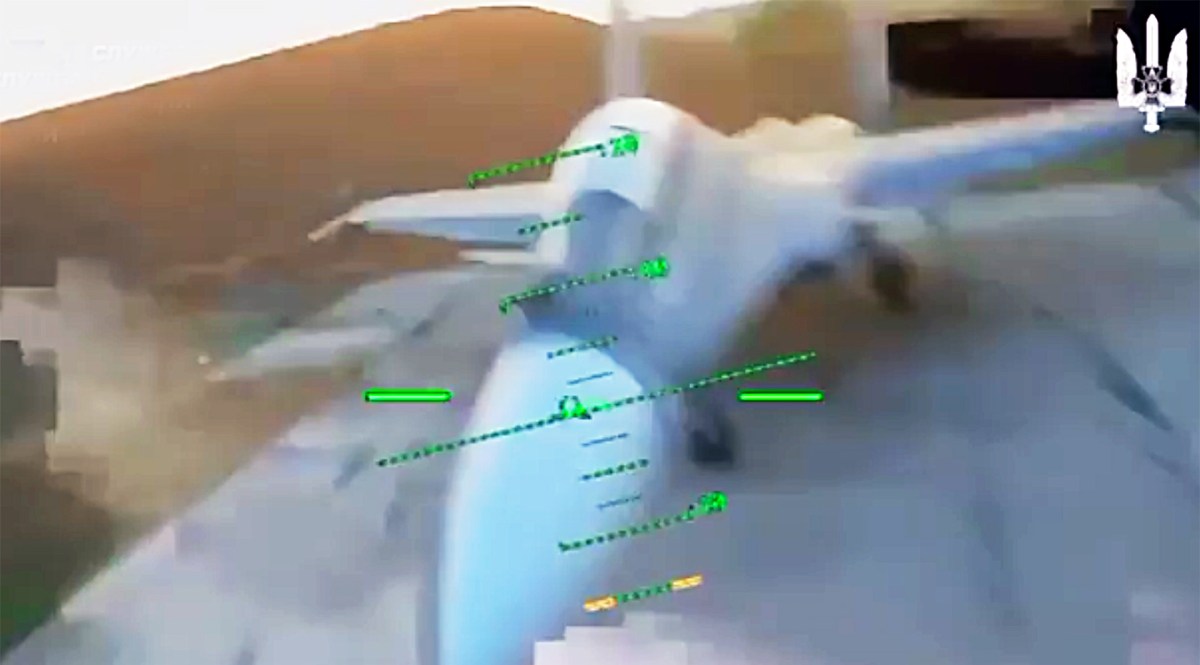
This is a very, very solvable problem and that should make russians shit their pants.
All that is really needed is the capability for stasis and longterm pause at the very final last leg of the journey. The strike asset should reach the airfield and then if possible wait until the moment russians open the doors up and pull a jet out for a sortie with it loaded up with explosives and fuel lines running everywhere…
In other words the problem isn’t really reaching the great distance to get to the airfield, it is being able to wait around once you get there until the moment it matters.
I mean, this is kind of a solved problem dating way back. You use weapons that produce damage and scatter random-delayed-fuze cluster submunitions. They randomly blow up over the next week or so. It’s too dangerous for humans to do airfield repair. A week later, you deploy a new batch.
The Brits had some dispenser that I remember that they used in Desert Storm.
searches
https://en.wikipedia.org/wiki/JP233
The JP233, originally known as the Low-Altitude Airfield Attack System (LAAAS), is a British submunition delivery system. It consists of large dispenser pods carrying several hundred submunitions designed to attack runways.[1]
Each JP233 as fitted to the Tornado was divided into a rear section with 30 SG-357 runway cratering submunitions, while the front section carried 215 HB-876 anti-personnel mines. Both types of submunitions were retarded by small parachutes.
The SG-357, which weighed 26 kilogrammes (57 pounds), was a two-stage munition. The longer, smaller-diameter forward section consists of a cylindrical high-explosive charge with a hole down the centre. The shorter, larger-diameter rear section held a shaped charge. At the front of the munition was a telescopic stand-off fusing system that created the correct detonation distance for the shaped charge. On impact, the extended fuse initiated the shaped charge, creating a metal jet which travelled through the centre of the forward charge element and then penetrated the concrete runway surface to create an underground chamber. The momentum of the cylindrical charge was enough for it to follow down through the hole created by the shaped charge before exploding some distance under the runway surface. This second explosion was intended to produce a crater with significant “heave” at the edge, making repairs much more difficult and time-consuming.[2]
The HB-876 mines would lie scattered on the surface, making rapid repair of the runway very hazardous. The outside of the munition was surrounded by a “coronet” of spring steel strips that were held flat against the sides of the mine. After landing on the surface, a small explosive device would fire and release the coronet springs such that the mine would become “erect” on the surface, with its self-forging fragment warhead pointing vertically upwards. The cylindrical case of the mine was made from dimpled steel and on detonation would spread small steel anti-personnel fragments, rather like a hand-grenade, in all radial directions. They would explode at preset intervals or if disturbed. Standing above the surface on the coronet of spring steel legs, they would tilt toward a bulldozer blade when pushed before detonating and firing the forged fragments toward the vehicle.[2]
We used a simpler system for area denial of potential German atomic weapons development sites in World War II — just large bombs with delayed mercury fuzes. Didn’t have the fuzing mechanism ironed out at the time, though, so some wound up upside down in soil, which slowed the fuze drastically, and so they’re still a UXO problem for Germany today. Use a reliable fuze.
EDIT:
https://en.wikipedia.org/wiki/Anti-runway_penetration_bomb
EDIT2: