

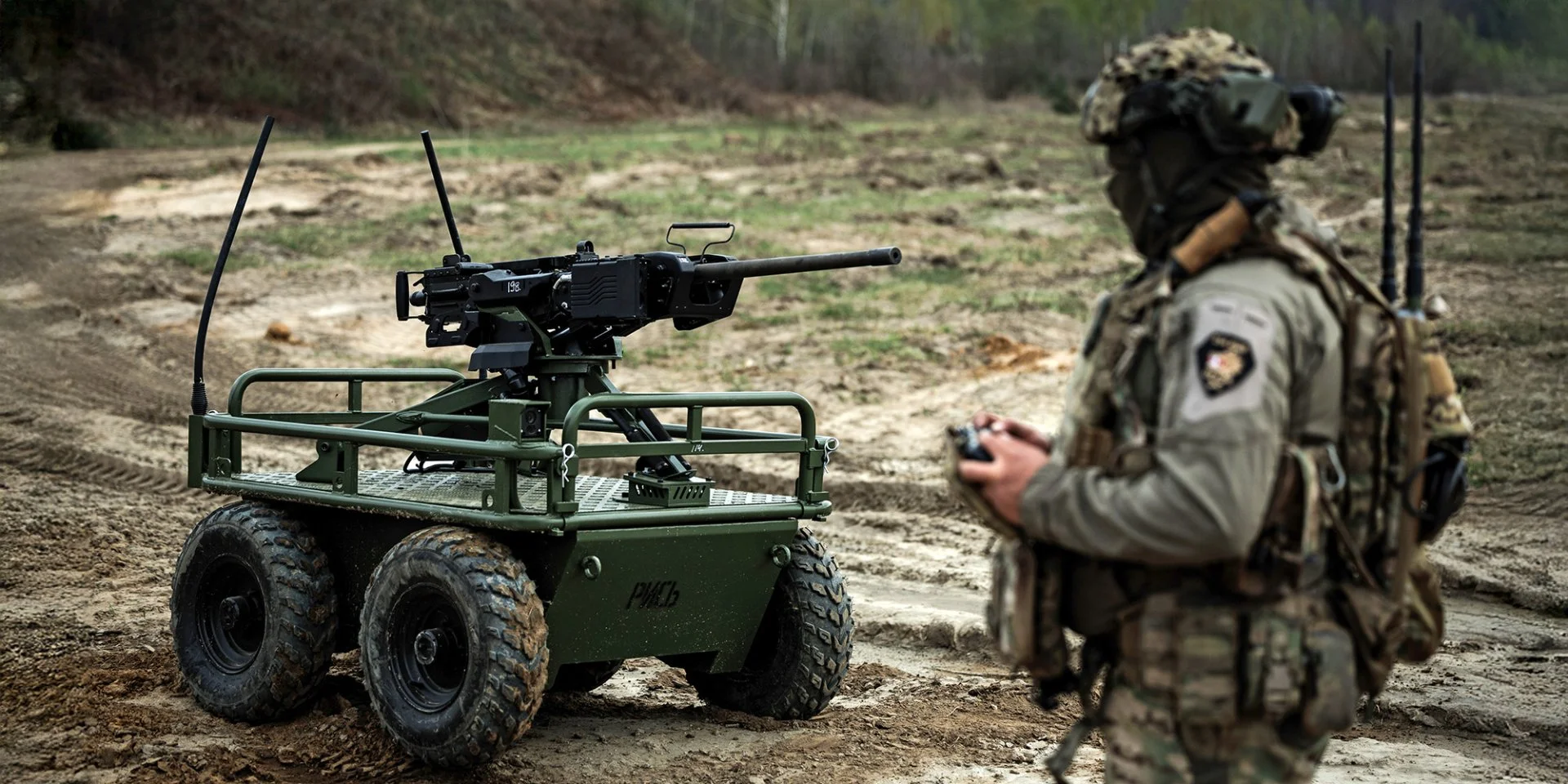
Units, operating GRCs in the Third Assault Brigade, for example, move more than 100 tonnes of cargo per month and evacuate dozens of wounded each week. As that brigade told NV, robotic platforms carry up to 500 kg per trip over distances of up to 20 km in conditions of electronic-warfare (EW) countermeasures.
By military estimates shared with NV, roughly 60% of GRC missions are logistics, 25% are casualty evacuation, and only 15% are direct combat operations. That mix, however, is what preserves soldiers’ lives in places where losses were once inevitable.
…
“If you compare UAVs and GRCs, we make some of the best in the world," an engineer-developer of a domestic combat GRC, calling himself Liut, told NV on condition of anonymity.
"They’re constantly used in real conditions and manufacturers keep modifying and improving them. Thanks to that experience we now hold advantageous positions.”
Ukraine is producing a wide range of robotic platforms: light wheeled Ratel S models for kamikaze missions at about 280 kg, to heavy diesel-driven Protector units with 700 kg payloads and a 400 km range.