- 28 Posts
- 258 Comments


 2·23 days ago
Fuel is used both for energy and for the molecules that are the input into products.
Energy is used for heating buildings, ocean transport, train and truck transport, personal transportation, electricity, mining, airplane travel, farming and so on.
The material feedstocks go into a wild array of products like all the sterile disposables they use at the hospital, clothing, shoes, eyeglasses, medications, farm fertilizers, food packaging, home building materials, road paving and so on
If you look around at the room you’re in, probably 90%+ of the items you see are either made from oil, made using oil, or transported to where you are by oil.
Shortages will require price spikes, the prices will have to go high enough that people can not or will not purchase as many of these items such that the low supply is met by low demand.
Because many of the items in this list are basic essentials, one of the main mechanisms to “reduce demand” is an economic shock that lands with higher unemployment and lower income for a large enough amount of people that demand and supply balance. In other words, people will have to be so poor they cannot pay.
Around 9/10ths of the food you eat started as oil if you trace the molecules back, they came from fossil fuel based fertilizers.
Under high-emission pathways, the northern soil carbon balance shifts from a sink to a source of 32 petagrams of carbon, advancing the reversal reported in earlier studies into the 21st century.
32 Petagrams is about equivalent to an extra 32 years of the current rate of emissions.
To add further insult to injury, the Arctic soils had been counted on to absorb atmospheric carbon over time and they will now only do that for half of the amount expected leaving about 30 more petagrams in the atmosphere that was supposed to come out.
This article really hits the mark.
The double empathy problem matters here.
In collapse-aware settings, this can be very practical. Neurotypical adults may hear neurodivergent climate distress as catastrophising. Neurodivergent young people may hear adult reassurance as denial. The adult thinks they are regulating the child. The child experiences this as evidence that the adult cannot see.
Not all leaving is loss.
I recently re-read this article
https://metarationality.com/stem-fluidity-bridge
And he says something rather interesting that relates to this topic.
Lengthy quote posted here:
Stages 3 and 5 both tolerate contradictions, but of different types and in different ways.
Stage 3 does not feel a need for rational justifications, and mostly doesn’t have the capacity to use them; so it mostly doesn’t even notice logical contradictions, and isn’t bothered by them when it does. However, stage 3 can be highly intolerant of contradictory value judgments, because they threaten community harmony.
Stage 4 finds contradictions within its system a fundamental problem, and tries to eliminate them one way or another. Eventually, if contradictions cannot be eliminated from the system, it must be replaced. Stage 4 wants to find the right system, and if two contradict, that shows one is wrong.
Stage 5 recognizes the value of sorting out contradictions within a system, and retains stage 4’s ability to do so. However, it doesn’t expect any system to work perfectly, so it tolerates internal contradictions if they appear relatively unproblematic. Stage 5 entertains multiple systems, and is comfortable with contradictions between them, because systems are not absolute truths, only ways-of-seeing that are useful in different circumstances. Stage 5 is uniquely comfortable with value conflicts, since (unlike both 3 and 4) it does not take any value as ultimate.
Ignore what “stage” means for now. When you are within a specific mentality / perspective, it can become a significant barrier to understanding how people outside that framework make meaning.
Here’s the point that caps this off :
For stage 4, stage 5’s tolerance of contradiction is indistinguishable from stage 3’s; both appear simply irrational
Stage 4 are basically highly educated people in leadership roles in a lot of life’s organizations. These are basically “technical” experts.
What’s interesting in the overall sense is that “collapse awareness” is almost a diagnostic. Like, to see collapse, an individual has to have this meta- systemic- mind. And to process it as “collapse” this individual needs to be able to find the contradictions and cognitive dissonance has to result. A lot of these steps and stages don’t happen to certain kinds of people.
So this is how you can get a world where you have these highly accurate remote sensing satellites giving us second by second thermal imaging of the planet and these scientists giving us computer modelled future projections of climate and yet not one of these scientists has been bothered by the actual physical impossibility of humanity changing course. They are following this instrumental path without groking the meaning of the information, there is this massive disconnect between what we know and what that means. These same technicians plan for retirement and discuss all kinds of fantasies that are totally outside of the solution space and live in contentment.
If you would point out where this all leads and what that means for us living right now, you are seen as nihilistic, irrational, overreacting, stupid, ignorant and so on.
Ironically, if you’ve been following the latest James Hansen stuff on climate, he says something rather sobering. Many of the world’s leading climate researchers and scientists figured out all these “climate models” which were the most accurate computer simulations of the global climate trajectory. These were used in policy and basically became the foundations of all the guardrails for destroying the habitability of the planet.
However, all the models made a crucial mistake about atmospheric particles and there were never any measurments taken.
Rather than improving our odds of survival by reducing harm, the climate models actually got us to DOUBLE the harm. The scientists made such a large mistake that it basically committed humanity to extinction. There is a lot to contend with in seeing how science achieved the exactly opposite effect than what it aimed to do.
So if you were to say “this was a huge mistake”, the institutions think you’re arguing from a position of not understanding the climate or not trusting science, rather than seeing through the hubris and incompetence that came out of having a fake system of knowledge.
 2·27 days ago
I think he said RENOUNCE victory?
 4·29 days ago
< checks notes for a list of things to buy >
“Ok guys, I’m ordering one time machine to go back to a stable period of earth’s history.”
And they are fake flowers.
A generation back the auto workers unions decided to invest the pension funds in the auto companies.
That cheap financing paid for the auto manufacturers to afford to close the unionized plants and move them to Mexico. Byeeeee! Enjoy your unemployment!
After four fall-offs, the process usually comes to a halt on its own?
I have a pet theory that the “money” is being siphoned from peoples’ retirement accounts.
They deregulated multiple safeguards against market concentration risk. Result that corporations have converted working people’s “safe” diversified retirement savings into growth-chasing “pick a winner” stock bets. For example, a 401K account can (now) be like 20%+ invested in a single company like Microsoft or Nvidia.
Then using accounting shenanigans, the AI hype and lots of other trickery certain tech stocks juiced their growth just as the brakes came off and they have sucked an ungodly amount of wealth out of the normal economy.
This is an epic (real) wealth transfer beyond anything I’ve seen or imagined.
If there is a rug pull, the billionaire safety bunkers will make sense.
This “market” exposure will wipe out the investor class also. This is the enshittification of the stock market.
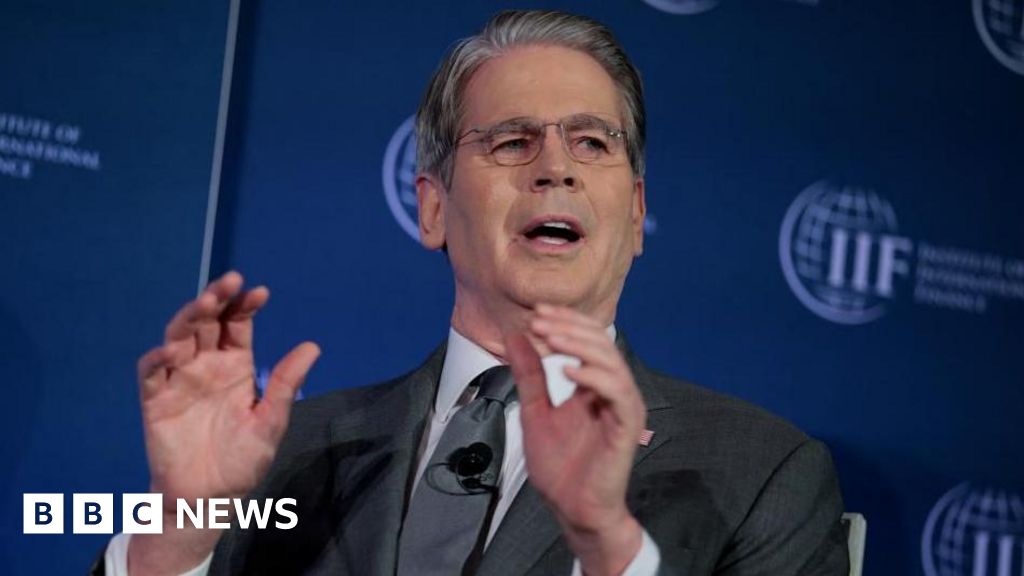
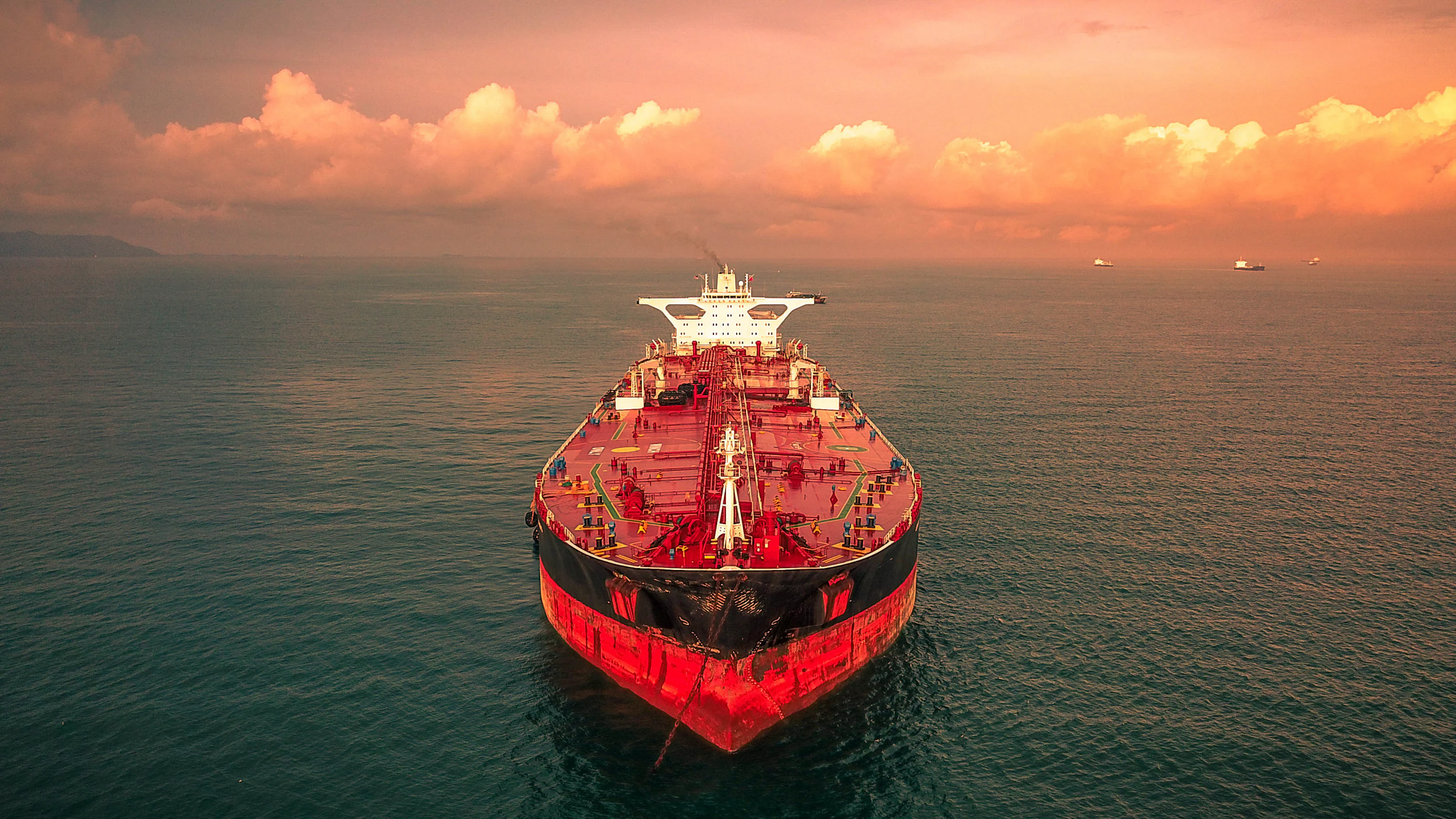
The immediate impact of the “iran war” is not simply in fossil energy, but also on a huge range of fossil fuel byproducts on which AI and many other industries depend. The global economy is still very much a fossil fuel economy, and AI is locking us even further into it.
I was thinking about how if there is any silver lining to the conflict, its that it deobfuscates some of the complex links in modern supply chains and it also makes salient how even some of the techno-optimist environmental and technical solutions are all underpinned by non-renewing energy and material resources…
he means they are going to keep raising the price of oil until it’s so expensive you don’t buy it anymore. They’re going to keep raising prices until you no longer even consider buying it.
Usually this means people will need to lose their jobs, therefore stop driving to work and have no money to go out or do anything.
So money broke physics?
Wine consultant Leon Deans said distillation could be a viable option to remove the oversupply, but may require government support because the cost of distilling the wine could be higher than the revenue from the ethanol.
If you consider that:
- cost of distilling bakes in the thermodynamic and energy costs of raising the temperatures of the wine to separate the alcohol
- the price for the pure alcohol is fungible with the market price of any other liquid fuel or alcohol on a per-energy equivalence
This seems like it’s a net energy negative process where the total amount of energy available to the society drops where you do this. This is exactly why it loses money.
Basically:
- you buy some energy some place
- wine producers take product they already made that has no market value and use the energy input to make something they can sell, using up that original energy
- the energy coming out is lower than what you started with in step 1, but you sell the energy for less money
- this loses energy AND money, but the government subsidies make the money side not a problem
This cuts wine makers in on the deal in a way where the market makes this feasible despite the underlying thermodynamic losses.
NOTE: the grapes and wine that were originally grown, the harvesting, bottling etc also have thermodynamic and material costs that are totally external to this analysis. The farm itself bought fuel when it made the wine, that’s all not ibcluddd into the ethanol calculus. When you consider the total investment with a wider boundary you can start to cost many additional resources like time, water, wages, insurance, financial interest and on and on.
- Comaps for driving / street navigation
- Caltopo for backcountry navigation (has offline maps)
- Trailforks for public recreation trails (hiking, mountain travel, mountain bike)
- Relief Maps for 3D landscape visualization / viewing

The LtG showed that if 1972 population had frozen at that level, there was STILL eventually a crash within a few hundred years.
And they also carefully stated that if you grew population from 1972 to 1990 and then had no further population growth (same idea starting 20 years late), the crash was before 2100. The window for any kind of sustainable population control would have already closed within the next 20 years.
What you’re outlining is a scenario where let’s say it’s roughly approximate to growing population from 1972 to 2022, then DECREASING population growth. Let’s say if we could snap our fingers and put today’s population of 8.3B to 1990s level of 5.3B, well we can already interpolate from the LtG that this doesn’t get us to 2100, they already spelled that out.
You need the following : Population rapidly back to 1990 or 1972 levels, double/unlimited resources, pollution controls, increased agriculture etc. Like basically every variable beyond all the most unrealistic scenarios they modelled.
You’re saying “there is a solution” but I think basically a lot of people would technically need to die somehow, given where we are in this story. So just ethically, no, there isn’t a solution.
The “voluntarily reduced population” was what they called “perfect birth control”. They showed that this led to a crash also. To really halt population growth into a “steady state” you need to place a strict license on reproduction to get zero growth, like an imposed law or whatever.
In the paper LtG 30yr recalibration, the model is validated against historical data and basically they say that the boundary in the original model was running out of resources, but in the revised model it’s pollution, but the limits are still in force. Almost all the other variables are in line to the original model. Resources and pollution are the main difference from the 1972 study, and they diverge in opposite directions and basically cancel the effect of the change in the other, so there is no change to the overall summed together story.
In a bee hive, many of the bees are sterile drone workers that don’t reproduce because the queen is laying clones that are even more related than their own direct offspring would be. So the drone workers genes are being better reproduced by the super organism.
Individual humans share 99.9% of genes in perfect overlap across all humanity. Therefore our genes don’t care about any individual human survival, the push is for growth at a community scale, anywhere. This is a situation with a profoundly different evolutionary drive than anything that Darwin cooked up. For human genetic evolution to occur, how would you drive it without operating that at a network level?
Places like Cuba and Haiti are a natural experiment in what life would look like without industrial agriculture inputs. They are basically producing food on organic small scale agriculture by hand.
Fun fact: Britain has around the same per capita agricultural area as Haiti does, only Britain is using fertilizer and in addition importing 50% of the food sold (almost like importing double the farm area). This amount of fertilizer costs less than 1/40,000th of Britain’s annual GDP.
- Standard run (business as usual) population crash around 2050.
- Doubled resources population crash around 2050.
- Unlimited resources population crash around 2050.
- Unlimited resources and pollution control population sharp decline 2075.
- Unlimited resources, pollution control and increased agriculture population crash around 2050.
- Unlimited resources, pollution control, increased agriculture and perfect birth control population crash around 2090.
- Stabilized earth (no population growth, no economic growth) crash after centuries. [* if you start in 1972. By 1990 it’s too late.]
In general, it seems like LtG scenarios show that more resources or more technology just push population level higher before hitting a crash. And as you point out, the crash is worse (steeper and more severe) the more resources and technology went on and the bigger the population at the point of collapse.
In a way you could analyze LtG as saying that overpopulation is the central issue and there is no solution set to solve population overshoot.








My town’s reservoir was built in the 1950s, several decades before the seismic risks of the USA west coast were fully understood. There is a real threat of the dam collapsing if there is an earthquake, so they can no longer store water (its filled 1/8th). It’s unclear what the options for replacing the dam are or how it would be paid for. All the shoreline infrastructure like campgrounds, beaches and boat ramps are comically high above the water level.
There are so many infrastructure investments that could become stranded assets in the future. This dam also had power generation, water control, flood protection and all kinds of other uses, many of these systems also need maintenance and reinvestment. At what point does it stop making sense to invest?