

Whether such claims are true or not, transnational criminal organizations (TCOs) are nothing if not adaptable, and will employ violence, intimidation, and corruption to preserve their illicit revenues.
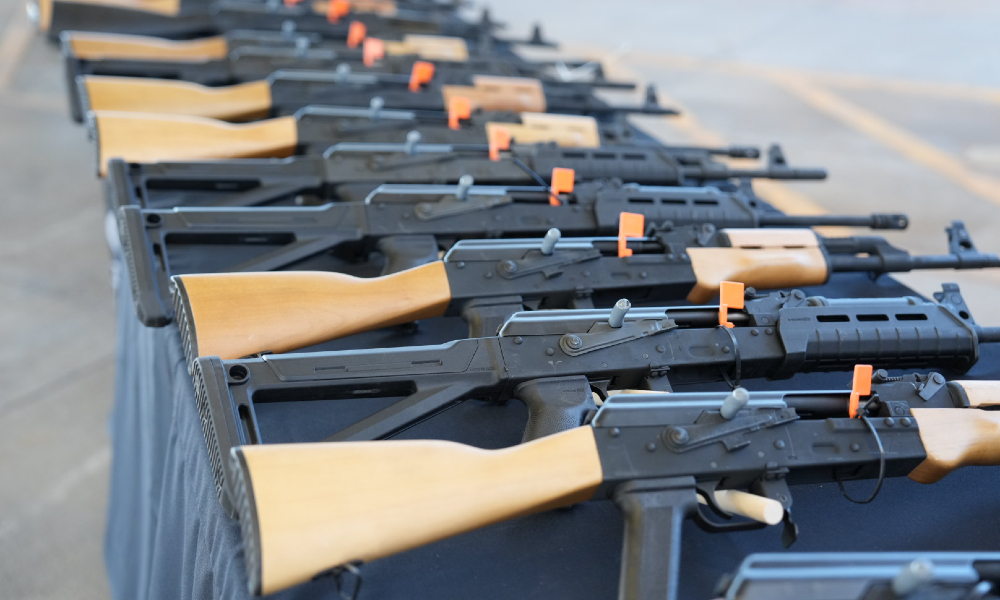
But for all its rhetorical bluster, the Trump administration appears to be dragging its feet when it comes to taking action against one of the most important pillars of cartel power: arms trafficking.
If the United States is serious about dismantling these groups and their power structures, it should first get serious about damming the iron river of guns that flows from the United States into cartel hands.
…
Although the United States has surged forces to the southwestern border, these forces have been more concerned with stopping south-to-north flows of drugs and migrants and inspecting the movement of arms and ammunition running the other way.
According to U.S. Customs and Border Protection data, between February 2025 and January 2026, the number of handguns and long arms seized while outbound from the United States has fallen by nearly 50 percent compared with the equivalent period from 2024 to 2025 (Figure 1).
The quantity of outbound ammunition seized has fallen by nearly 70 percent (Figure 2). Arms seizure incidents are also down, reaching a four-year low in January 2026. Reports that ATF personnel have been reassigned from trafficking investigations to focus on immigration enforcement cases further suggest that the United States still fails to grapple with its own role in the Western Hemisphere’s criminal ecosystem.