

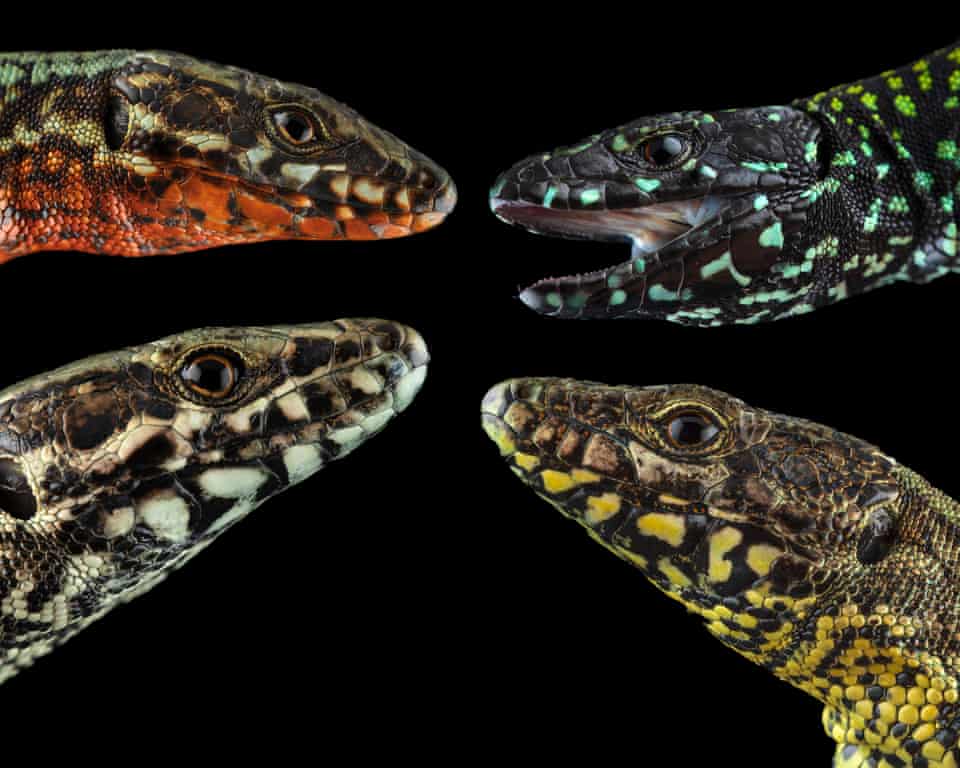
Even after more than a decade studying colour variations among European lizards, their differences still amaze Ábalos. “Who’d guess they’re the same species?” he says, smiling.
Despite their obvious differences, both animals are adult males of the common wall lizard (Podarcis muralis), a widespread species whose remarkable variation in colour, size and behaviour reveals a crucial dimension of biodiversity: the variation within species.
The lizards are evidence that biodiversity is far more complex than a simple inventory of species inhabiting an ecosystem.
Differences in rostral ornaments, or horns, among male Parson’s chameleons (Calumma parsonii) in Madagascar, social or feeding behaviours among populations of chimpanzees (Pan troglodytes), regional song dialects in white-crowned sparrows (Zonotrichia leucophrys), or colour variation in common wall lizards are all expressions of biodiversity within species. And this biodiversity is not static, but often shifts to the tune of evolution.