Anyway, yes - helicopter can down shaheds, no - it can’t down them every 6 shots.
I literally posted video montages of AH-64s doing precisely that.
And unless your country is bigger than average dick israel helicopters would be even more ineffective.
The larger the area the more effective helicopters are? …? That is kind of the point of helicopters in the first place?
shaheds can do a lot of things
…and a helicopter can do all of them better, faster, more decisively and far more cost efficiently.
Sure if you only need to lift a small payload, use a shahed or two, but if we are talking major military operations, shaheds are vastly inefficient when seen from a materials standpoint.
That doesn’t follow, like at all? No the larger your country the more helicopters you need just in time near the place where they are going to attack. And how many AH-64 were made since 40(?) years ago like 4000?
The point of helicopters is questionable and niche in modern warfare.
helicopters can do …
They can’t be disposable remotely controlled cruise missiles disguised as a drone, nor can they be made by thousand a day, nor can they work as a retranslator for other helicopters, nor can they launch small disposable remotely controlled missiles. So they literally can’t do any of the mentioned things.
Shaheds are inefficient in how high tech they are for the purpose. Everything else they do just fine, you don’t hate the fpvs and aerial bombs as much as shaheds.
No the larger your country the more helicopters you need just in time near the place where they are going
The larger the country the more space there are for helicopters to intercept shaheds, and the far greater amount of time is spent flying over territory where the shaheds can be detected and destroyed. The larger the country the more efficient it is to deploy large amounts of static acoustic sensors quickly over an area using a helicopter.
The only platform more efficient in fuel use for hunting down shaheds are fixed wing aircraft, but they suffer major unsurmountable problematic shortcomings such as high stall speeds and the tactical rigidity of needing to come up directly behind a flying bomb to destroy it, putting the aircraft right in the path of debris from the resulting explosion. Further, fixed wing aircraft rely on highly vulnerable static infrastructure that is trivially easy to spot with satellite imagery or other kinds of reconnaisance, and long range shahed-type flyinb bombs are nearly ideal for striking airbases from long range from unexpected directions. Helicopters do not.
They can’t be disposable remotely controlled cruise missiles
No but helicopters are a nearly ideal launch platform for large salvos of long range cruise missiles.
nor can they be made by thousand a day
No but a small fraction of the world’s military helicopters can very easily shoot down a thousand shaheds a day and do so for a far less of a cost than all the shaheds cost as disposable assets.
nor can they launch small disposable remotely controlled missiles.
You have clearly not heard of APKWS missile capability on helicopters such as the AH-64 and AH-1Z nor Martlet missiles on British Helicopters such as the Merlin and Wildcat, nor of any number of missile-helicopter pairings all over the world?
The certified launch capability of guided munitions from a AH-64 or AH-1Z is a dictionary of guided missile development, they can shoot anything and everything essentially, so you are horrifically off point here.
nor can they work as a retranslator for other helicopters
I guess you have never heard of Link16 capability with AH-64s and AH-1Zs? That is one of the primary purposes of a military attack/scout helicopter as a tool.
Shaheds are inefficient in how high tech they are for the purpose.
Shaheds are inefficient because they are glorified overly expensive target drones for helicopter pilots, that is my whole point. It isn’t a monetarily superior strategy, hyperfocusing on shahed development is mathematically a losing proposition even before you factor in all of the other benefits that come from investing in helicopters and helicopter pilots over raw shahed production.
The idea that this is some new super cost efficient way of war is an illusion partially sustained by the truth that it makes close air support and long range air attack actually affordable and realistic to a degree for impoverished, poorly trained irregular forces such as the russian military in 2026 that cannot hope to reliably sustain more sophisticated aeronautics programs.

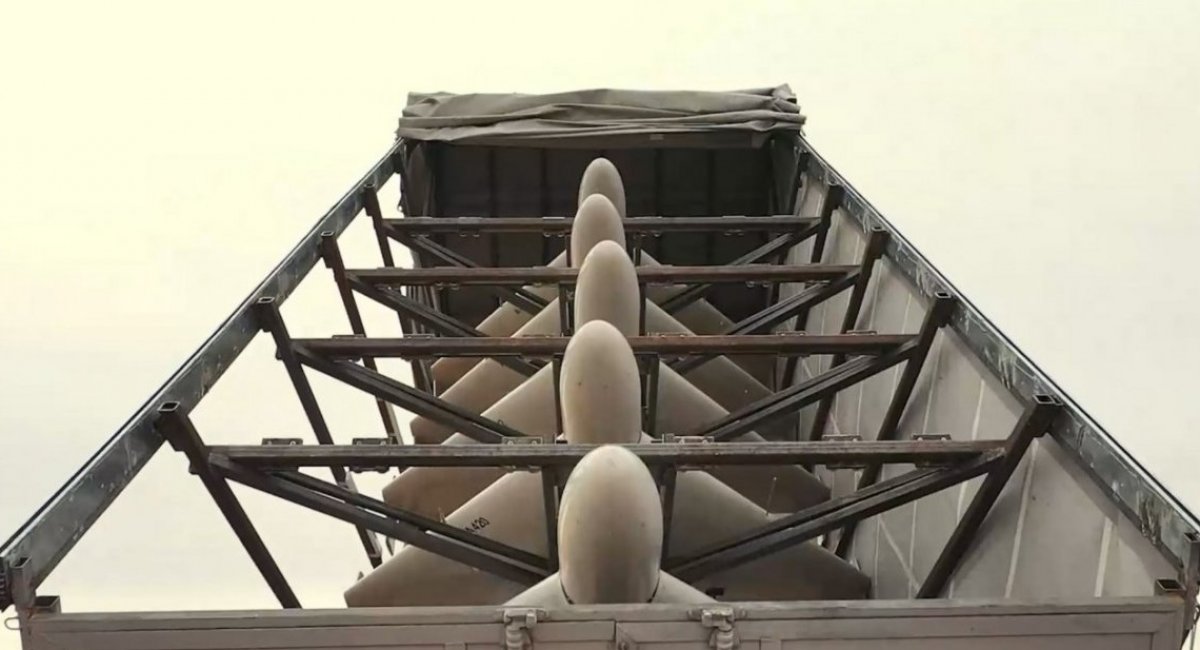
I literally posted video montages of AH-64s doing precisely that.
The larger the area the more effective helicopters are? …? That is kind of the point of helicopters in the first place?
…and a helicopter can do all of them better, faster, more decisively and far more cost efficiently.
Sure if you only need to lift a small payload, use a shahed or two, but if we are talking major military operations, shaheds are vastly inefficient when seen from a materials standpoint.
That’s the funny part.
That doesn’t follow, like at all? No the larger your country the more helicopters you need just in time near the place where they are going to attack. And how many AH-64 were made since 40(?) years ago like 4000? The point of helicopters is questionable and niche in modern warfare.
They can’t be disposable remotely controlled cruise missiles disguised as a drone, nor can they be made by thousand a day, nor can they work as a retranslator for other helicopters, nor can they launch small disposable remotely controlled missiles. So they literally can’t do any of the mentioned things.
Shaheds are inefficient in how high tech they are for the purpose. Everything else they do just fine, you don’t hate the fpvs and aerial bombs as much as shaheds.
The larger the country the more space there are for helicopters to intercept shaheds, and the far greater amount of time is spent flying over territory where the shaheds can be detected and destroyed. The larger the country the more efficient it is to deploy large amounts of static acoustic sensors quickly over an area using a helicopter.
The only platform more efficient in fuel use for hunting down shaheds are fixed wing aircraft, but they suffer major unsurmountable problematic shortcomings such as high stall speeds and the tactical rigidity of needing to come up directly behind a flying bomb to destroy it, putting the aircraft right in the path of debris from the resulting explosion. Further, fixed wing aircraft rely on highly vulnerable static infrastructure that is trivially easy to spot with satellite imagery or other kinds of reconnaisance, and long range shahed-type flyinb bombs are nearly ideal for striking airbases from long range from unexpected directions. Helicopters do not.
No but helicopters are a nearly ideal launch platform for large salvos of long range cruise missiles.
No but a small fraction of the world’s military helicopters can very easily shoot down a thousand shaheds a day and do so for a far less of a cost than all the shaheds cost as disposable assets.
You have clearly not heard of APKWS missile capability on helicopters such as the AH-64 and AH-1Z nor Martlet missiles on British Helicopters such as the Merlin and Wildcat, nor of any number of missile-helicopter pairings all over the world?
The certified launch capability of guided munitions from a AH-64 or AH-1Z is a dictionary of guided missile development, they can shoot anything and everything essentially, so you are horrifically off point here.
I guess you have never heard of Link16 capability with AH-64s and AH-1Zs? That is one of the primary purposes of a military attack/scout helicopter as a tool.
Shaheds are inefficient because they are glorified overly expensive target drones for helicopter pilots, that is my whole point. It isn’t a monetarily superior strategy, hyperfocusing on shahed development is mathematically a losing proposition even before you factor in all of the other benefits that come from investing in helicopters and helicopter pilots over raw shahed production.
The idea that this is some new super cost efficient way of war is an illusion partially sustained by the truth that it makes close air support and long range air attack actually affordable and realistic to a degree for impoverished, poorly trained irregular forces such as the russian military in 2026 that cannot hope to reliably sustain more sophisticated aeronautics programs.